GIC Fillings
Fluoride-releasing, tooth-bonding restorations that protect and repair, in one visit.
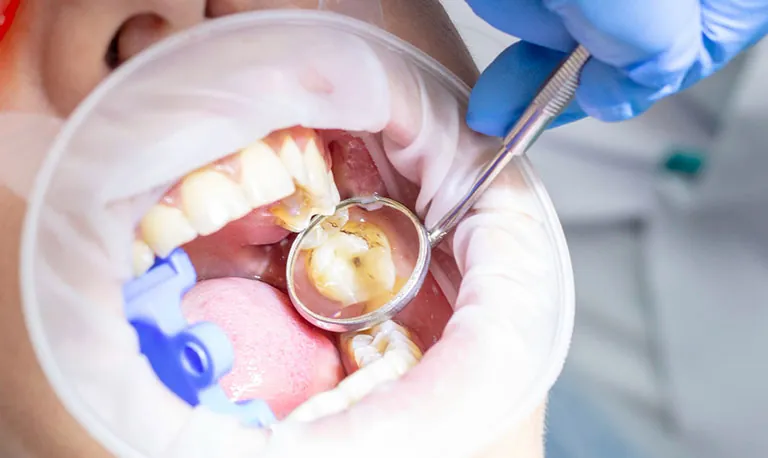
What is GIC Fillings?
Glass Ionomer Cement (GIC) fillings are a versatile and protective restorative material used to repair cavities, especially in areas of the mouth where aesthetics are secondary to durability and fluoride protection. The unique property of GIC is that it chemically bonds to tooth structure and continuously releases fluoride, actively protecting the surrounding enamel from further decay.
GIC is the preferred restorative material for cavities in baby teeth (milk teeth) due to its biocompatibility with developing enamel, its fluoride-releasing property, and its ability to be placed with minimal tooth preparation. In adults, GIC is commonly used for cervical (near the gum line) cavities and as a base layer beneath composite fillings in deep cavities.
Our dentists place GIC fillings in a single home visit with no laboratory steps required. The material sets quickly, is moisture-tolerant (an advantage for certain patients), and provides reliable, long-lasting protection.
Why GIC Fillings?
Understanding the purpose behind your treatment helps you make confident, informed decisions about your oral health.
Fluoride Release Protects Surrounding Teeth
Unlike composite resin, GIC continues to release fluoride ions into the surrounding enamel for years after placement. This actively prevents secondary decay from forming around or adjacent to the filling.
Ideal for Children's Teeth
GIC is the material of choice for restoring baby teeth because it bonds well to underprepared enamel, tolerates the challenging oral environment of young children, and provides protective fluoride during the critical developmental period.
Minimal Tooth Removal Required
GIC bonds chemically to tooth structure, requiring less drilling than other restorative materials. This conservative preparation preserves more of your natural tooth, always the priority in modern dentistry.
Biocompatible & Durable
GIC is well-tolerated by the pulp and surrounding tissues, making it suitable for deep or sensitive cavities. It provides a reliable seal that prevents microleakage and further bacterial ingress.
Is GIC Fillings right for you?
Understanding who benefits most from this treatment, and who may need a different approach, helps you make a confident, informed decision about your care.
GIC is the preferred material for milk teeth, it bonds to minimally prepared enamel, releases fluoride continuously, and tolerates the difficult clinical conditions in young patients.
Cervical (near-gum) cavities are best restored with GIC due to its chemical bond to root dentine and superior moisture tolerance in this challenging area.
GIC is ideal for small-to-medium cavities, particularly in patients at high decay risk who benefit most from ongoing fluoride release.
Continuous fluoride release from GIC actively prevents secondary cavities forming around the restoration, a significant advantage in decay-prone patients.
GIC is routinely used as a protective base layer in deep cavities beneath composite resin, providing pulpal protection and additional fluoride benefit.
GIC is less wear-resistant than composite on heavily loaded posterior biting surfaces, composite, inlay, or a crown is more appropriate for large occlusal cavities.
The translucency and shade range of GIC are inferior to composite resin. Visible front teeth with cosmetic concerns are better restored with tooth-coloured composite.
GIC as a standalone adult posterior restoration has limited longevity under biting forces. It performs best as a base, for cervical cavities, or in baby teeth.
How we do gic fillings
Every step is performed by certified dentists at your home in Hyderabad, with fully portable, sterilized clinic-grade equipment.
Examination & Diagnosis
The dentist examines the affected tooth and determines the extent of decay. A GIC filling is selected when the cavity size, location, and patient profile make it the optimal restorative choice.
Anaesthesia (if needed)
For deeper cavities, a local anaesthetic is administered to ensure the procedure is completely comfortable. Many small or cervical cavities can be filled without anaesthesia.
Cavity Preparation
Decayed tooth structure is removed using a dental handpiece and hand instruments. GIC requires minimal preparation, only decayed tissue is removed, leaving healthy enamel and dentine intact.
GIC Placement
The glass ionomer cement is mixed and applied in layers into the cavity. It is shaped to restore the tooth's natural contour and adapted to the bite so you do not notice it when chewing.
Setting, Finishing & Polish
The GIC sets within minutes. The dentist checks your bite and polishes the surface smooth. Aftercare instructions are provided, including avoiding hard foods on the side for 24 hours.
Aftercare for GIC Fillings
Follow these guidelines after your treatment to ensure the best possible healing and long-term results.
Avoid Chewing on That Side for 2 Hours
Allow the GIC material to complete its initial set before placing chewing forces on the restoration.
Avoid Hard Foods for 24 Hours
GIC takes time to reach full strength. Avoid hard or crunchy foods on the filled side for the first day after placement.
Expect Mild Sensitivity Initially
Slight temperature sensitivity is common for a few days after placement. Use a sensitivity toothpaste if needed, it settles on its own.
Continue Normal Oral Hygiene
Brush and floss normally around the filled tooth. Do not avoid the area, plaque control around the restoration is essential.
Contact Us If the Bite Feels High
A slightly raised bite after filling is common and easily corrected with a quick polish. Do not ignore it, an uneven bite causes soreness.
Attend Regular Check-Ups
GIC fillings are monitored at every 6-monthly check-up for integrity. Early detection of any wear or marginal gap prevents larger problems.
The Prudentoe Advantage
We bring the full capability of a modern dental clinic to your living room. The same certified doctors, the same sterilized instruments, the same clinical standards, with the comfort and convenience only a home visit can provide.
Autoclave-sterilized instruments, single-use consumables, PPE, and sterile drapes for every patient.
Dental chair, LED surgical light, high-speed handpiece, ultrasonic scaler, and complete instrument kit.
Dr. Vidushi Agarwal and Dr. Rohan Kotoju are BDS-certified with extensive clinical experience.
Book online or on WhatsApp. We confirm your appointment and send doctor details within 30 minutes.
Frequently Asked Questions
Everything you need to know about gic fillings, answered clearly.
GIC Fillings at home, in your neighborhood
Prudentoe brings gic fillings to your home across all 30+ Hyderabad neighborhoods. Click your area for local details.
Related treatments
Composite Fillings
Tooth-coloured, seamless restorations that look and feel completely natural.
Learn more →Dental Check-up & Examination
Early detection, prevention, and personalised oral health maintenance, at home.
Learn more →Dental Crowns
Full-coverage restorations that rebuild, protect, and revitalise damaged teeth.
Learn more →Across Hyderabad
We perform gic fillings at homes across these neighbourhoods. Not your area? WhatsApp us to confirm.
Ready to book your gic fillings at home?
Our certified dentists will come to your home anywhere in Hyderabad, fully equipped, fully sterilized. Confirmation within 30 minutes.