Dental Crowns
Full-coverage restorations that rebuild, protect, and revitalise damaged teeth.
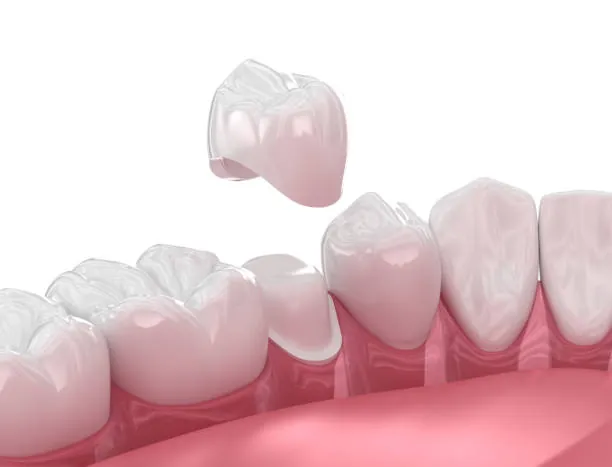
What is Dental Crowns?
A dental crown is a custom-fabricated cap that fits entirely over a damaged, weakened, or aesthetically compromised tooth. Crowns are one of the most versatile restorations in dentistry, used after root canal treatment, to protect a tooth fractured by decay or trauma, to strengthen a tooth with large existing fillings, to anchor a dental bridge, or to improve the appearance of discoloured or misshaped teeth.
Crowns are available in several materials: full porcelain (most aesthetic, ideal for front teeth), porcelain-fused-to-metal (PFM) for a balance of strength and aesthetics, and full metal (most durable, typically used for back molar crowns where appearance is less critical). Our dentists will recommend the most appropriate material based on the tooth's location, bite forces, and your aesthetic goals.
Crown placement typically requires two visits, one for preparation and impression, and one for final fitting. Our team coordinates all laboratory fabrication and ensures the final crown fits precisely and comfortably.
Why Dental Crowns?
Understanding the purpose behind your treatment helps you make confident, informed decisions about your oral health.
Protect a Structurally Weak Tooth
After root canal treatment or when a large filling occupies most of the tooth, the remaining structure is vulnerable to fracture. A crown encases the tooth entirely, distributing bite forces and preventing catastrophic fracture.
Restore Full Chewing Function
A damaged or compromised tooth affects how you chew, often causing you to avoid one side of your mouth. A well-fitted crown restores full, symmetric chewing function and bite force.
Natural Appearance
Modern porcelain crowns are indistinguishable from natural teeth in colour, translucency, and light reflection. They are routinely used on front teeth where aesthetics are paramount.
Long-Term Cost Efficiency
A crown protects a tooth that would otherwise fracture and require extraction. The cost of a crown is a fraction of the cost of an implant or bridge, making it the most economical way to extend a tooth's lifespan.
Is Dental Crowns right for you?
Understanding who benefits most from this treatment, and who may need a different approach, helps you make a confident, informed decision about your care.
A root-canal-treated tooth is structurally weakened and prone to fracture. A crown is essential in the vast majority of RCT-treated posterior teeth.
When a filling occupies more than 50% of a tooth's structure, the remaining tooth is at risk of fracture. A crown distributes bite forces safely over the entire tooth.
A crown binds a cracked tooth together, preventing the fracture from propagating to the root, which would render the tooth non-restorable.
Patients with bruxism or acid erosion who have lost significant tooth height benefit from crowns to restore vertical dimension and protect remaining structure.
Teeth adjacent to a gap require crowns to anchor a bridge. If those teeth already have large fillings or structural compromise, a crown is doubly indicated.
A crown removes significant healthy tooth structure unnecessarily. A composite filling is the conservative first choice when remaining structure is adequate.
If a tooth has fractured below the gum line with minimal structure remaining, it may not be able to hold a crown. Extraction may be unavoidable in severely compromised cases.
Full porcelain adult crowns are not suited to developing jaws. Stainless steel or zirconia paediatric crowns are used in specific cases where a baby tooth requires full coverage.
How we do dental crowns
Every step is performed by certified dentists at your home in Hyderabad, with fully portable, sterilized clinic-grade equipment.
Examination & Material Selection
The dentist assesses the tooth's condition, discusses the appropriate crown material (porcelain, PFM, or metal), and explains the procedure, timeline, and cost.
Tooth Preparation
Under local anaesthesia, the tooth is reduced on all surfaces to create space for the crown. The amount removed depends on the material selected, typically 1–2mm per surface.
Impression & Temporary Crown
A precise impression of the prepared tooth and opposing teeth is taken and sent to the dental laboratory. A temporary acrylic crown is fabricated and cemented to protect the tooth in the interim.
Crown Fabrication (Laboratory Phase)
The dental laboratory crafts the permanent crown to precise specifications. This typically takes 5–10 working days. We coordinate delivery to your home address.
Trial Fit & Cementation
The permanent crown is placed without cement first to verify fit, colour match, bite, and aesthetics. Once you and your dentist are satisfied, it is permanently cemented and polished.
Aftercare for Dental Crowns
Follow these guidelines after your treatment to ensure the best possible healing and long-term results.
Avoid Hard Foods for 24 Hours
Give the cement adequate time to fully set before placing heavy biting forces on the crown. Avoid nuts, ice, and very hard bread crusts initially.
Temporary Crown Precautions
If wearing a temporary crown, avoid sticky foods (toffee, chewing gum) and minimise use on that side until the permanent crown is fitted.
Expect Initial Sensitivity
Newly crowned teeth can be sensitive to temperature for a few days as the tooth adjusts. This settles without intervention in most cases.
Floss Carefully Around Crowns
Floss daily around the crown by sliding it gently rather than snapping it through, this protects the crown margin from cement washout.
Report Any Bite Discomfort Promptly
A crown that causes the bite to feel uneven should be adjusted within a few days. Prolonged uneven pressure causes progressive tooth soreness.
Protect the Crown from Damaging Habits
Avoid nail biting, ice chewing, and using teeth as tools. These habits are the leading causes of porcelain crown fracture.
The Prudentoe Advantage
We bring the full capability of a modern dental clinic to your living room. The same certified doctors, the same sterilized instruments, the same clinical standards, with the comfort and convenience only a home visit can provide.
Autoclave-sterilized instruments, single-use consumables, PPE, and sterile drapes for every patient.
Dental chair, LED surgical light, high-speed handpiece, ultrasonic scaler, and complete instrument kit.
Dr. Vidushi Agarwal and Dr. Rohan Kotoju are BDS-certified with extensive clinical experience.
Book online or on WhatsApp. We confirm your appointment and send doctor details within 30 minutes.
Frequently Asked Questions
Everything you need to know about dental crowns, answered clearly.
Dental Crowns at home, in your neighborhood
Prudentoe brings dental crowns to your home across all 30+ Hyderabad neighborhoods. Click your area for local details.
Related treatments
Root Canal Treatment
Save your natural tooth, eliminate pain, and restore full function, at your home.
Learn more →Dental Bridges
Permanently replace missing teeth and restore your bite, speech, and smile.
Learn more →Dental Implants
Permanent, natural-looking tooth replacement with preserved jawbone and lifelong results.
Learn more →Across Hyderabad
We perform dental crowns at homes across these neighbourhoods. Not your area? WhatsApp us to confirm.
Ready to book your dental crowns at home?
Our certified dentists will come to your home anywhere in Hyderabad, fully equipped, fully sterilized. Confirmation within 30 minutes.